Job Offer: Harmonic Analyst – Research Assistant (ChordIA Project)
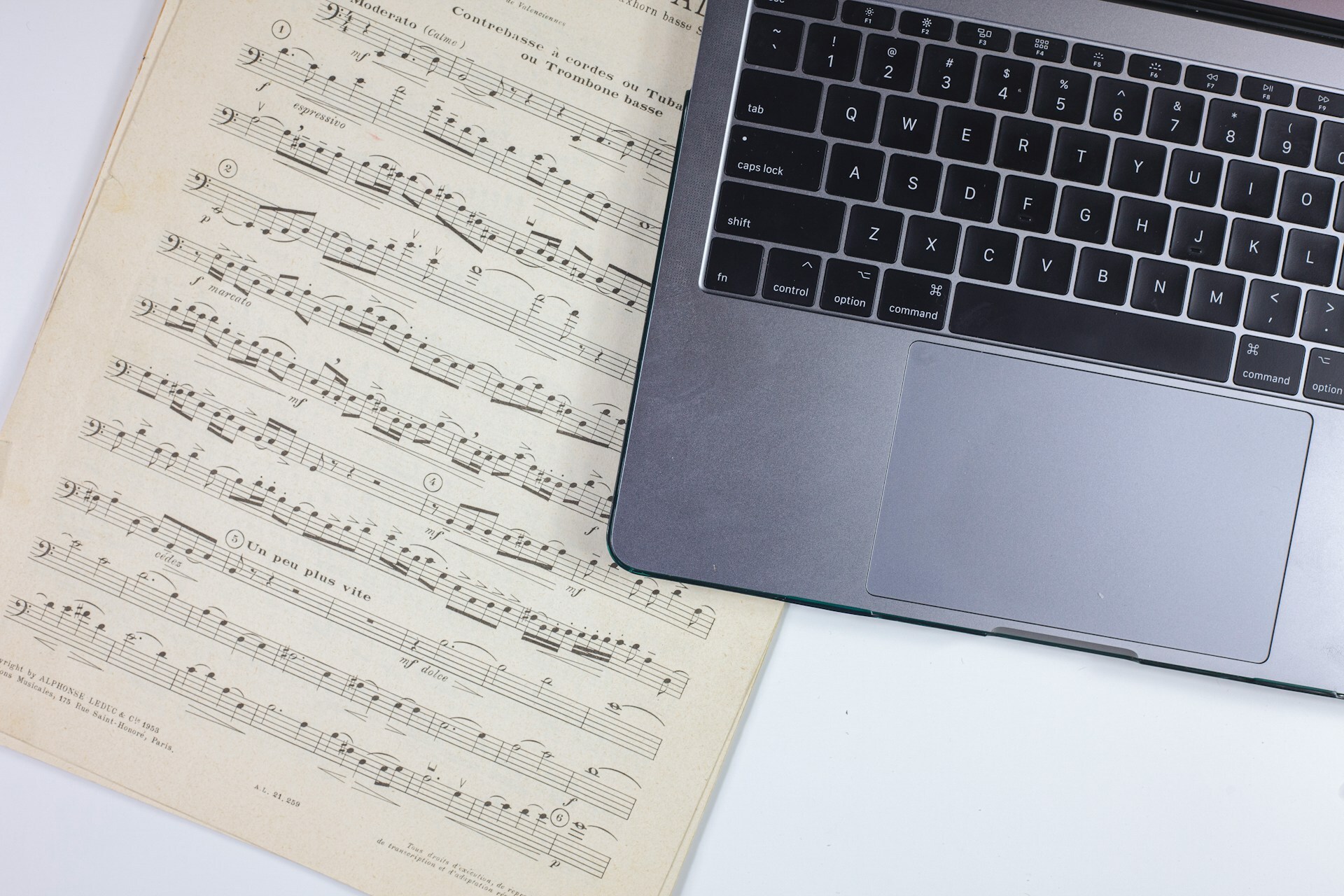
We are looking for a graduate (or MPhil) in Musicology / Music with a special interest in Western music (1580-1750).
As a key member of the ChordIA project, you will
• Conduct comprehensive harmonic analysis of the digital musical sources within the corpus, applying advanced theoretical knowledge to accurately annotate chord progressions and tonal structures.
• Support the quality control process by correcting and editing 16th to 18th-century musical scores as you analyze them.
• Document analytical decisions by introducing critical notes regarding both the harmonic analysis and the musical editions into the project’s management app (e.g., Trello).
About the ChordIA Project
Proyecto ChordIA: Unveiling Musical Grammar, ref. SYG-2024/PH-HUM-801, financiado por la Comunidad de Madrid con las ayudas a Proyectos Sinérgicos de I+D 2024.
The ChordIA-CM project («Unveiling Musical Grammar»), funded by the Comunidad de Madrid, is a groundbreaking synergistic research initiative focused on studying the emergence and consolidation of the tonal system in Western music (1580-1750). This collaborative project brings together researchers from the Instituto Complutense de Ciencias Musicales (ICCMU), the Universidad Nacional de Educación a Distancia (UNED-LENAR) and professionals from the Universidad Complutense de Madrid (UCM), under the leadership of Prof. Dr. Álvaro Torrente Sánchez-Guisande (ICCMU/UCM) and the Associate Professor Salvador Ros Muñoz (UNED).
Project Aims
ChordIA’s core objectives are
- To create a large-scale, multimodal dataset of thousands of musical works (1580-1750), including digital scores (, MusicXML, MuseScore), harmonic annotations and text.
- To develop an optimized sequencing format for training Large Language Models (LLMs) on symbolic music data.
- To conduct a diachronic study of the relationship between poetic structure and harmonic planning using NLP techniques.
- To design an agent-based architecture and multimodal models for the advanced analysis of harmony.
- To establish a comprehensive evaluation framework and leaderboard for musical language models.
Candidate’s Profile
- Required University degree: BA in Music, Musicology or equivalent.
- Excellent and very complete musical training: desirably, conducting, string/keyboard instrument, composition or equivalent.
- Scientific rigor: musicology or equivalent knowledge.
- Experience in critical edition: preferably of 16th to 18th-century music.
- Knowledge of other European languages, especially Italian.
- Teamworking skills.
- Systematic work method.
- Command of music engraving software (MuseScore) and familiarity with formats like MusicXML.
We Offer
- Contract duration: from September 2026 to November 2028.
- Schedule: Part-time contract (50%). Day shift flexibility.
- Weekly hours: 18.75. We are specifically looking for active professionals who wish to combine this role with other professional activities.
- Annual gross salary: €13,011.96, distributed in 12 monthly payments with pro-rated bonus payments included.
- To work with an ambitious and interdisciplinary team with experience in musicology, statistics, AI, and computer science.
- The workplace is situated at the Universidad Complutense de Madrid, Donoso Cortés Street, Madrid. The selected candidate will be hired by ICCMU and will be able to work remotely.
Application Process
- Submission: Interested candidates should submit a CV, a motivation letter (outlining relevant experience) and at least one professional reference letter to: chordia@iccmu.es.
- Deadline: Sunday, July 12 2026 (23:59 CET)
- Interviews (online): July 20-24 2026
ICCMU and the ChordIA project value diversity and are committed to creating an inclusive environment for all employees. We encourage applications from individuals of all backgrounds, including –but not limited to– race, ethnicity, gender, sexual orientation, age, and disability.